Every watch in our Omega collection has been inspected and authenticated by our watchmaker and is backed by our authenticity guarantee.

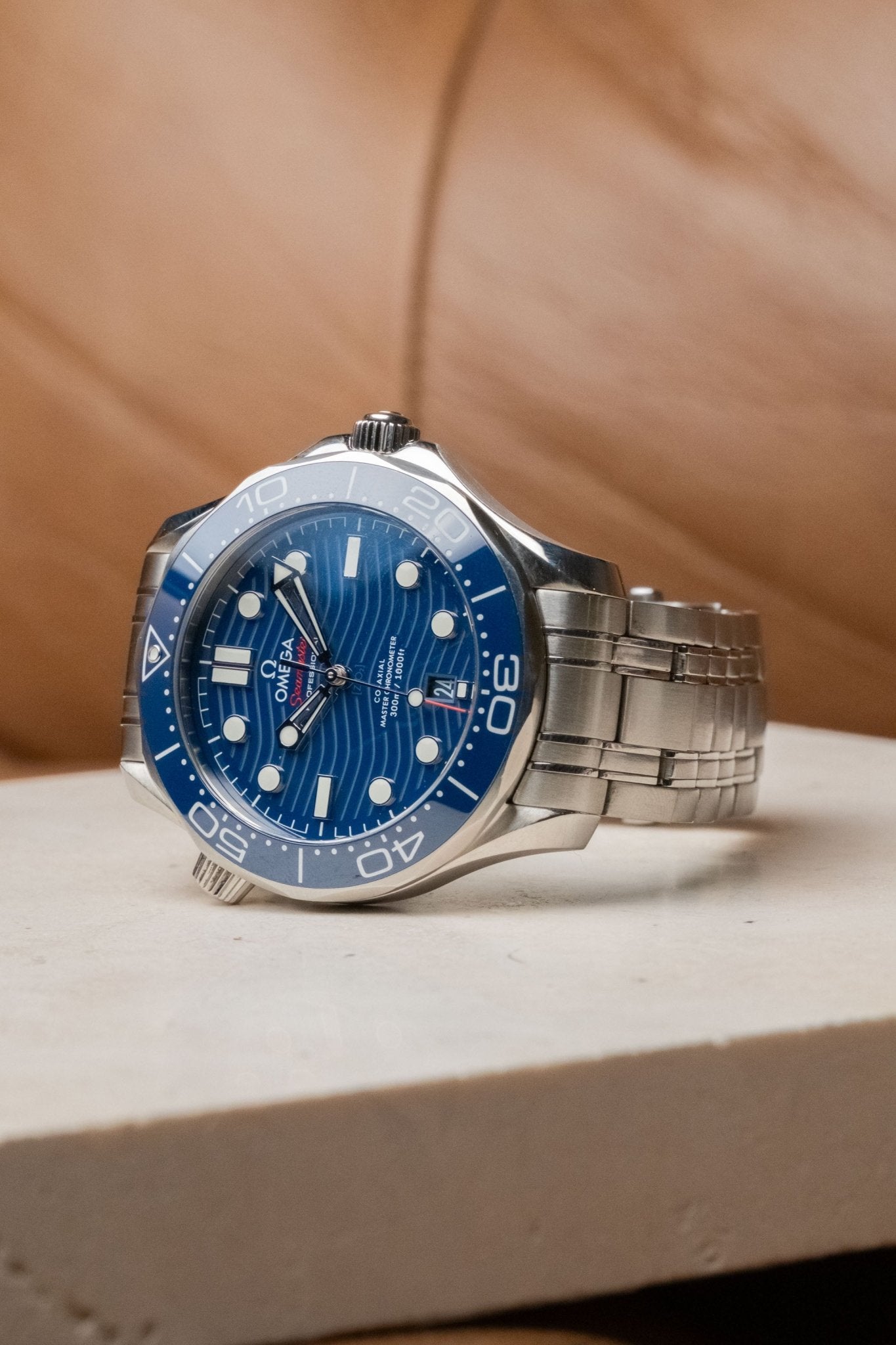
2019 Omega Seamaster Diver 300M
Why Buy a Pre-Owned Omega?
Omega has spent close to two centuries building watches that were genuinely used for something such as space exploration, deep-sea diving, and Olympic timekeeping. Buying pre-owned means, you inherit that history at a fraction of the cost of buying new, and because Omega's catalogue moves in and out of production, the secondary market is often the only way to get discontinued references, older dial variants, or vintage calibres that Omega simply doesn't make any more.
The value case is straightforward. A clean, well-serviced pre-owned Speedmaster or Seamaster typically costs 30 to 50% less than the equivalent new retail price, without giving up much — sometimes anything — in terms of condition or warranty. Provided you're buying from a dealer who stands behind the watch. At Wristory, that's the whole point of what we do: every watch is authenticated, serviced where needed, and sold with the same confidence you'd expect from an authorised dealer.
Pre-owned buying also opens the door to references that simply aren't available new like pre-moon Speedmasters, vintage Seamasters from the 1950s and 60s, and early Constellation “pie pan” models. If you're after something specific, our source-a-watch service can track down particular references on your behalf.
Understanding the Omega Collections
Omega's modern range is built around four core families. The Speedmaster is the brand's chronograph icon originally built for motorsport but made famous by space travel. The Seamaster covers everything from serious dive watches to elegant everyday sports watches. The Constellation is Omega's precision dress-watch line, the most historically accurate recreation to date. The De Ville is the pure elegant, dress-focused collection with the least sporting DNA of the four. Together they cover almost every occasion a collector could want, which is why Omega remains one of the most versatile Swiss houses to collect.
The Trinity of 1957
1957 is the year when collectors started taking Omega seriously. That year, Omega released three tool watches within months of each other: the Speedmaster (for motorsport), the Seamaster 300 (for diving), and the Railmaster (for engineers and scientists working near strong magnetic fields). Known today as the “Trinity,” these three watches established Omega as a genuine tool-watch maker, rather than simply a dress-watch brand. The Speedmaster and Seamaster remain the backbone of the collection almost seventy years later.
Omega Speedmaster: The Moonwatch
The Speedmaster is Omega's most notable watch, and for a good reason. It's the only wristwatch qualified by NASA for spacewalks, and it was seen on Buzz Aldrin's wrist when he landed on the lunar surface in 1969. That history is exactly why the Speedmaster Professional “Moonwatch” has barely changed its core design in over sixty years: a manual-wind chronograph with a black dial, tachymeter bezel, and three sub-dials. Browse our Speedmaster selection for available references.
Pre-Moon vs Modern Speedmaster
Collectors talk about Speedmasters in terms of their calibre. “Pre-moon” watches — those built before or right around the 1969 landing — used the hand-wound calibre 321, prized today for its column-wheel construction and its direct link to the Apollo missions. From the 1970s, Omega moved to the calibre 861 (later updated to the 1861), a simpler and more robust cam-actuated movement that powered the Moonwatch for decades and is still found in many pre-owned examples on the market today. The modern Moonwatch now uses the calibre 3861, a Co-Axial Master Chronometer movement with improved accuracy and magnetic resistance, introduced from 2019 onward. Calibre 321 examples are generally considered more desirable than 861/1861/3861 references largely because of scarcity and the direct connection to Omega's space history.
Speedmaster Reduced and Day-Date variants
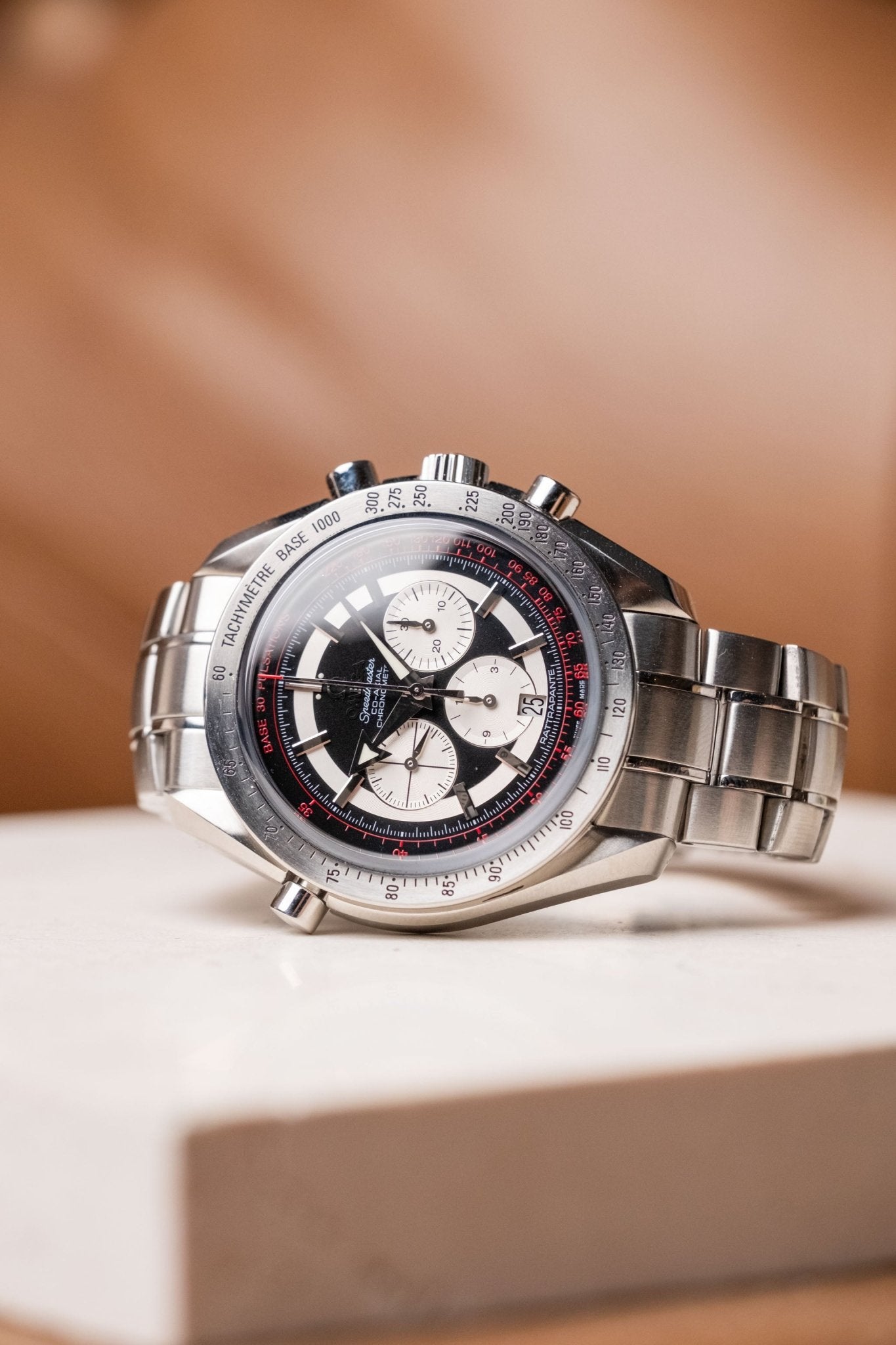
Not every Speedmaster is a manual-wind Moonwatch. The Speedmaster Reduced is a slightly smaller-cased, automatic version introduced in the 1980s and 90s aimed at everyday wear rather than pure tool-watch collecting. Meanwhile the Day-Date variants add a practical calendar complication that the classic Moonwatch has never offered. We regularly carry Day-Date references such as the automatic 3520.50 Mk40 when they come into inventory, it’s genuinely an underrated way to get Speedmaster styling with everyday practicality.
How much should I pay for a pre-owned Speedmaster?
Expect to pay between roughly AU$3,000 to 6,500 for a clean, correctly running modern Moonwatch (861/1861/3861) with box and papers, depending on condition, age and completeness. Vintage calibre 321 pre-moon watches sit well above this range and are priced individually based on originality, dial condition and documented history. As with any pre-owned luxury watch, price is only meaningful alongside condition and authentication. A cheaper watch with an unverified movement or replaced parts is rarely the better buy.
Omega Seamaster: From Dress Watch to Dive Icon
The Seamaster name covers more ground than any other Omega collection from serious professional dive watches to slim, versatile everyday pieces. It's also the collection with the widest span of pre-owned prices, which makes it an accessible entry point into the brand. Have a look through our current Seamaster range.
Seamaster Professional 300M (Bond Watch)
The Seamaster Professional 300M is the watch most people picture when they hear “Omega dive watch.” A wave-pattern dial, helium escape valve and water resistance up to 300m. It was worn on-screen by Pierce Brosnan, Daniel Craig and their successors as James Bond since GoldenEye in 1995. That film association helped make it one of the most recognisable dive watches in the world. But, it holds up entirely on its own merits as a robust, well-engineered tool watch that looks sharp under a suit cuff.
Seamaster Aqua Terra: The Versatile Daily Wearer
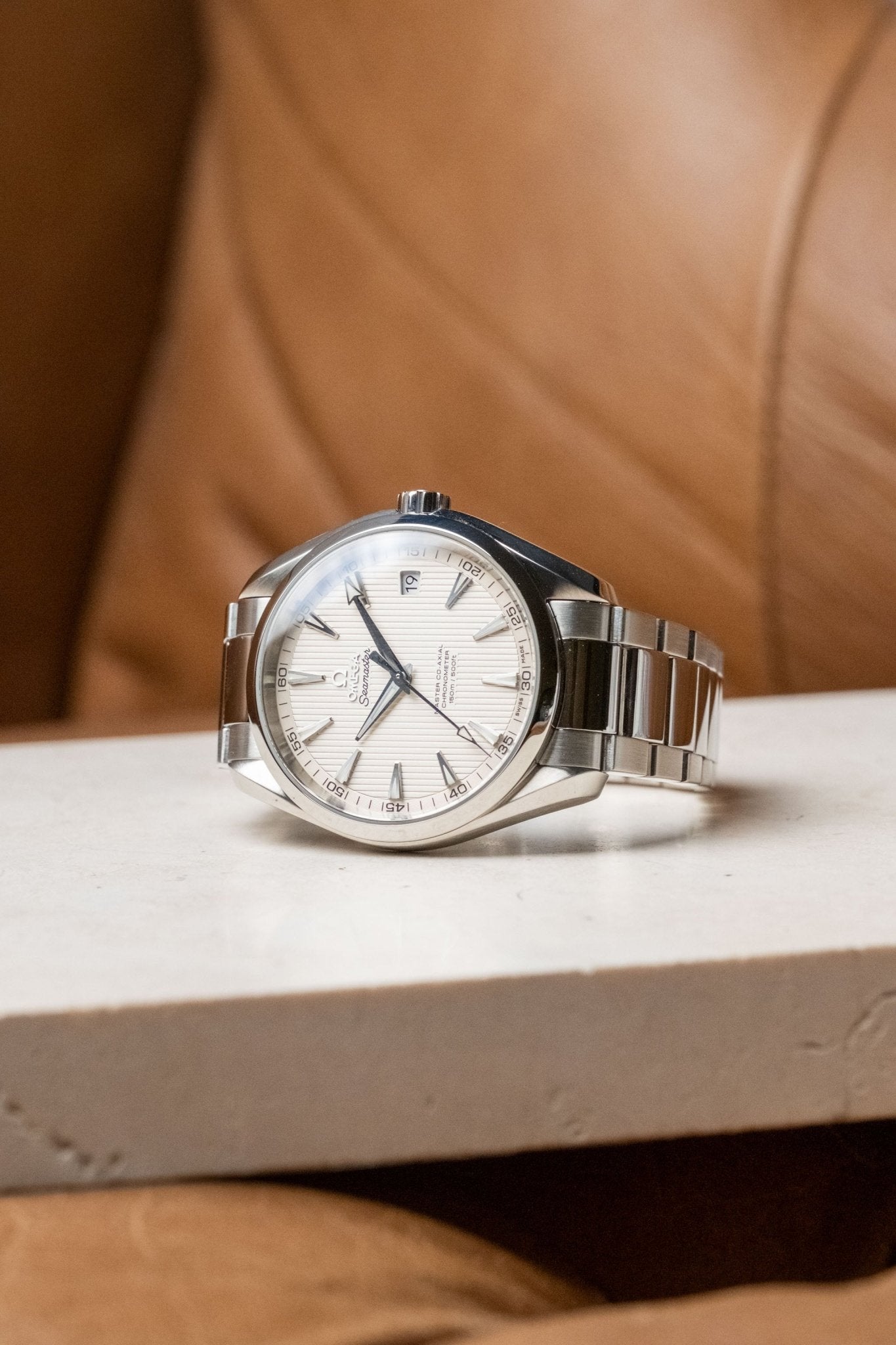
If the 300M is Omega's dive watch, the Aqua Terra is its “one watch” answer. A horizontally brushed “teak” dial, slimmer case and Master Chronometer certification (independently tested for accuracy and magnetic resistance by Switzerland's METAS) make it equally at home in the office or on the water. When watches like the 231.10 are in stock, they're usually among the first Aqua Terras to move, due to the model's versatility which make it a genuine daily wearer for a lot of our clients.
Vintage Seamaster (1958-1970s)
Before the Seamaster became a dive-watch specialist, it was Omega's do-everything sports-dress hybrid, and vintage examples from the late 1950s through the 1970s remain some of the best value in the entire pre-owned Omega market. A good illustration of just how wearable and well-proportioned these earlier automatic Seamasters remain today.
Omega Constellation: The Original Chronometer
Long before quartz accuracy was taken for granted, the Constellation was Omega's statement of precision. Every Constellation was certified as a chronometer, and the collection became Omega's flagship for exactly that reason. It's a less sporty proposition than the Speedmaster or Seamaster, but for buyers who want understated luxury with a genuinely important place in watchmaking history, it's hard to beat. Browse current examples in our Omega collection.
Constellation Pie Pan vs C-Case vs Modern Globemaster
Three distinct eras define the Constellation line. The original “pie pan” dials of the 1950s and 60s get their nickname from a faceted dial shape that resembles an upside-down pie tin, and they're prized today for their period-correct dress watch proportions. The 1980s and 90s “C-case” (sometimes called the “Manhattan”) introduced the four claw-like lugs and integrated bracelet that most people now picture when they think “Constellation,” a bolder, more overtly luxurious design. In 2015, Omega revived the pie-pan dial in the modern Globemaster, built to full Co-Axial Master Chronometer standard, effectively bringing the original Constellation concept back with today's movement technology.
Omega De Ville: Understated Elegance
The De Ville is Omega's purest dress watch statement. It has a slim case, clean dial, and none of the tool-watch DNA of the Speedmaster or Seamaster. It's the collection to consider if you want an Omega that reads first as an elegant timepiece and only second as a watch with a story to tell. Pre-owned De Ville pricing tends to sit below the equivalent Speedmaster or Seamaster, making it a genuinely affordable way into the brand for buyers who prioritise dress watch styling over sports watch history.
De Ville Prestige and Hour Vision
The De Ville Prestige is the collection's take on classic expressions — simple dials, dauphine or baton hands, and a case designed to sit low and comfortable under a shirt cuff. The De Ville Hour Vision moves things in a slightly more contemporary direction, with a transparent date window, sword-style hands and a marginally sportier case that still reads as a dress watch. Both are worth a look for buyers who've decided the Speedmaster or Seamaster simply isn't the occasion they're shopping for.
How to Authenticate a Pre-Owned Omega
Authentication is the single most important part of buying pre-owned, and it's worth understanding what a real check involves rather than taking a listing's word for it. Our watchmakers physically open and inspect every Omega that comes through Wristory, checking that the movement, dial, case and bracelet are period-correct and consistent with each other, as a mismatched combination is one of the clearest signs of a watch that's been parted-out or poorly restored.
We also cross-check serial numbers and case references against known production data, and where relevant, Omega's own archive extract service can confirm original configuration and shipping details for older pieces. Beyond the movement itself, we look closely at dial printing, lume application and case finishing, all areas where reproduction or refinished parts tend to give themselves away under close inspection. If you're evaluating a watch privately be wary of pricing that seems too good to be true, missing or inconsistent serial numbers, and sellers who won't allow the watch to be independently inspected before purchase.
Every watch we sell passes this process before it goes on display. If you're not local, our private viewing appointments make it easy to inspect a watch in person before committing to a purchase.
Why Buy from Wristory Melbourne
Wristory is based at 162 Collins Street in the heart of Melbourne's CBD, and we built the business around the idea that buying a serious pre-owned watch shouldn't feel like a gamble. Every watch is authenticated by our in-house watchmakers, and since we hold genuine inventory rather than working purely on consignment, you can inspect, handle and try on the actual watch before you decide in our Melbourne showroom by private appointment.
Looking for a specific watch we don't currently have in stock? Our source-a-watch service lets us go looking on your behalf, and if you're upgrading from an existing piece, our sell-a-watch page outlines how trade-ins work. Whichever Omega collection you land on, we'd rather spend the time helping you find the right watch than push you toward rather than simply focusing on the most popular options.
Frequently Asked Questions
Are pre-owned Omega watches reliable?
Yes — Omega movements are built for decades of use, and a correctly serviced pre-owned Omega is just as reliable as a new one. Reliability comes down to the individual watch's service history and condition rather than its age, which is exactly why authentication and inspection matter more than whether a watch is new or pre-owned.
What is the most popular pre-owned Omega?
The Speedmaster Professional Moonwatch and the Seamaster Professional 300M are the two most sought-after pre-owned Omega references, thanks to their space and Bond associations respectively. Both offer strong recognisability, robust build quality and a wide enough production run that clean examples are genuinely findable.
Do Omega watches hold their value?
Well-maintained Omega watches, particularly Speedmasters and Seamasters with box, papers and service history, tend to hold their value reasonably well on the pre-owned market. We don't recommend buying any watch purely as an investment, but a correctly bought, well-cared-for Omega is unlikely to lose significant value over time.
What's the best Omega for a first luxury watch?
The Seamaster Aqua Terra or the Speedmaster Professional Moonwatch are both excellent first Omegas — one leans everyday-versatile, the other leans iconic and historically significant. Which is “best” really comes down to whether you want a watch for daily wear or a strong, story-rich statement piece.
How much does an Omega service cost?
A full service for a mechanical Omega in Australia typically costs between AU$500 to 900, depending on the calibre and whether any parts need replacing. We recommend budgeting for a service roughly every 5–7 years under normal wear, covered in more detail in our watch care guide.
What's the difference between Hesalite and sapphire crystal Speedmasters?
Hesalite is a lightweight acrylic crystal used on the original Moonwatch specification. It scratches more easily than sapphire but can be polished out, and it won't shatter under impact the way sapphire occasionally can. Sapphire crystal, used on many modern Speedmaster variants, is far more scratch-resistant but slightly more brittle, so the choice largely comes down to whether you prioritise scratch resistance or period-correct authenticity